
product
-
-
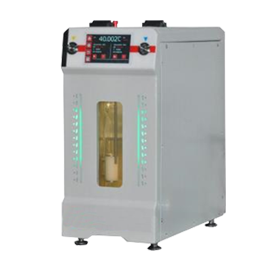
KN-7279C Automated Houillon Viscometer
KN-7929C Automated Houillon Viscometer conforms to ASTM D7279 Standard Test Method for Kinematic Viscosity of Transparent and Opaque Liquids by Automated Houillon Viscometer. Many petroleum products and some non-petroleum products are used as lubricants in the equipment, and the correct operation of the equipment depends upon the appropriate viscosity of the lubricant being used. Additionally, the viscosity of many petroleum fuels is important for the estimation of optimum storage, handling, andRead
more >
-
-
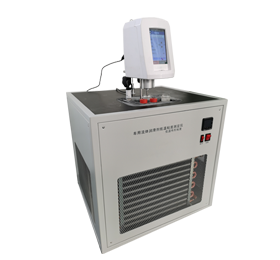
KN-2983 Low Temperature Brookfield Viscometer
The low-temperature, low-shear-rate viscosity of automatic transmission fluids, gear oils, torque and tractor fluids, and industrial and automotive hydraulic oils are of considerable importance to the proper operation of many mechanical devices. Measurement of the viscometric properties of these oils and fluids at low temperatures is often used to specify their acceptance for service. This test method is used in a number of specifications.Read
more >
-
-
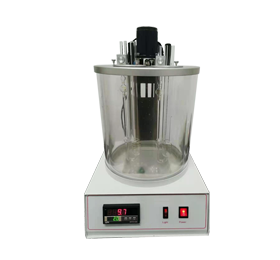
KN-4603 Inherent Viscosity Apparatus for PET Polyester
The inherent viscosity is determined by measuring the flow time of a solution of known polymer concentration and the flow time of the pure solvent in a capillary viscometer at a fixed temperature. The inherent viscosity value is calculated from the flow time valuesRead
more >
-
-
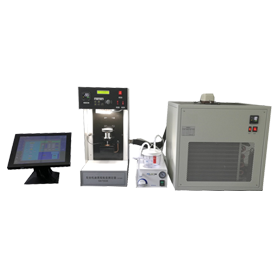
KN-5293 Automated Cold Cranking Simulator (CCS) Viscosity Apparatus
The CCS apparent viscosity of automotive engine oils correlates with low temperature engine cranking. CCS apparent viscosity is not suitable for predicting low temperature flow to the engine oil pump and oil distribution system. Engine cranking data were measured by the Coordinating Research CouncilThe measurement of the cranking viscosity of base stocks is typically done to determine their suitability for use in engine oil formulations. A significant number of the calibration oils for this metRead
more >
-

-
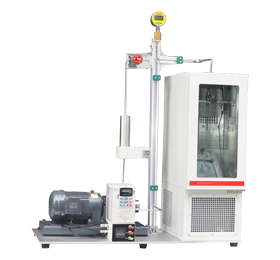
KN-4684 Yield Stress Apparent Viscosity of Engine Oils Apparatus
An engine oil sample is held at 80°C and then cooled at a programmed cooling rate to a final test temperature and held for a specified time period. At the end of this period, a series of increasing low torques are applied to the rotor shaft until rotation occurs to determine the yield stress, if any is exhibited. A higher torque is then applied to determine the apparent viscosity of the sample.Read
more >
-
-
KN-1092 Apparatus for Apparent Viscosity of Lubricating Grease
KN-1092 Apparatus for Apparent Viscosity of Lubricating Grease conforms to ASTM D1092 Standard Test Method for Measuring Apparent Viscosity of Lubricating Grease. This Test method covers measurement, in poises, of the apparent viscosity of lubricating greases in the temperature range from -54℃ to 38℃ (-65℉ to 100℉). Measurements are limited to the range from 25P to 100000P at 0.1s-1 and 1P to 100P at 15000s-1. Apparent viscosity versus shear rate information can be useful in predicting pressure Read
more >
-

-
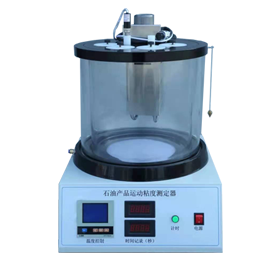
KN-5481 High-Temperature and High-Shear Rate Apparent Viscosity Tester (HTHS)
High-Temperature and High-Shear Rate Apparent Viscosity Tester (HTHS) covers the laboratory determination of high-temperature high-shear (HTHS) viscosity of engine oil at a temperature of 150℃ using a multicell capillary viscometer containing pressure, temperature, and timing instrumentation. The shear rate for this test method corresponds to an apparent shear rate at the wall of 1.4 million reciprocal seconds (1.4 3 106s-1).This shear rate has been found to decrease the discrepancy between thisRead
more >
-
-
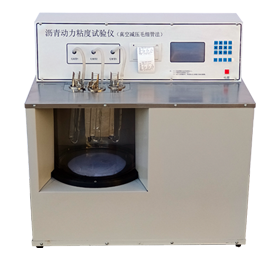
KN-2170 Asphalt Kinematic Viscosity Bath
the kinematic viscosity characterizes flow behavior. the method is used to determine the consistency of bitumen as one element in establishing the uniformity of shipments or sources of supply. the specifications are usually at temperature of 60 and 135℃.Read
more >
-
-
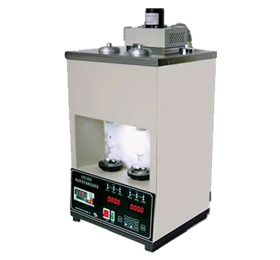
KN-2171 Apparatus for Viscosity of Asphalts
KN-2171 Apparatus for Viscosity of Asphalts conforms to ASTM D2171 Standard Test Method for Viscosity of Asphalts by Vacuum Capillary Viscometer. The viscosity at 60℃ characterizes flow behavior and may be used for specification requirements for cutbacks and asphalt binders. This time is measured for a fixed volume of the liquid to be drawn up through a capillary tube by means of vacuum, under closely controlled conditions of vacuum and temperature. The viscosity in Pascal-seconds is calculated Read
more >
-
-
KN-88 Asphalt Saybolt Viscometer
KN-88 Asphalt Saybolt Viscometer is designed and made as ASTM D88 Standard Test Method for Saybolt Viscosity. It covers the empirical procedures for determining the Saybolt Universal or Saybolt Furol Viscosities of petroleum products at specified temperatures between 21 and 99℃ (70 and 210℉).Read
more >

 No.88 Xin Shuini Road, Ganjingzi District, Dalian, Liaoning Province
 Mobile:+86-13889520862 Email:jimmychou@kaycantest.com; info@kaycantest.com

 Method

